
Visual essay · Fine-art nature photography
Black & white
nature
photography
I usually begin looking for lines, light and contrast in the field. Sometimes nature is almost monochrome already; sometimes removing colour helps me see it more clearly.

The idea
It does not begin with a button in editing.
I try to see what light and dark are doing while I am still out there: a white hare against dark ground, one black bird among hundreds of pale guillemots, or a flock moving like ink across the sky. I choose my position and frame with that image in mind. Afterwards, I may remove the last traces of colour if they distract. If a small colour accent adds something, I keep it. There is no fixed rule; each photograph asks for its own choice.
Ten photographs
What remains
without colour?
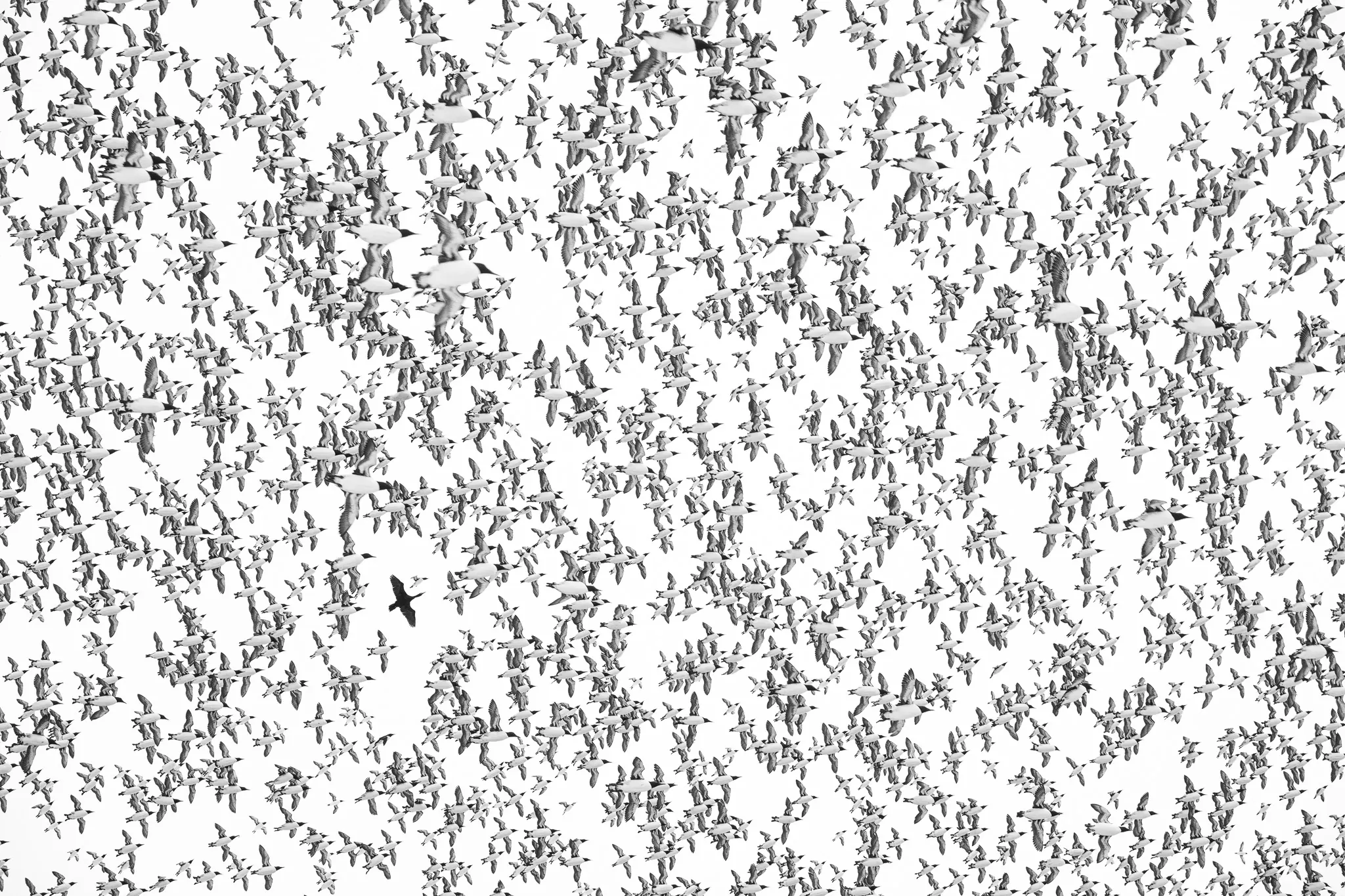
Be Different
All those guillemots and one cormorant. I saw the black-and-white image in the birds themselves; it did not need to be created afterwards.
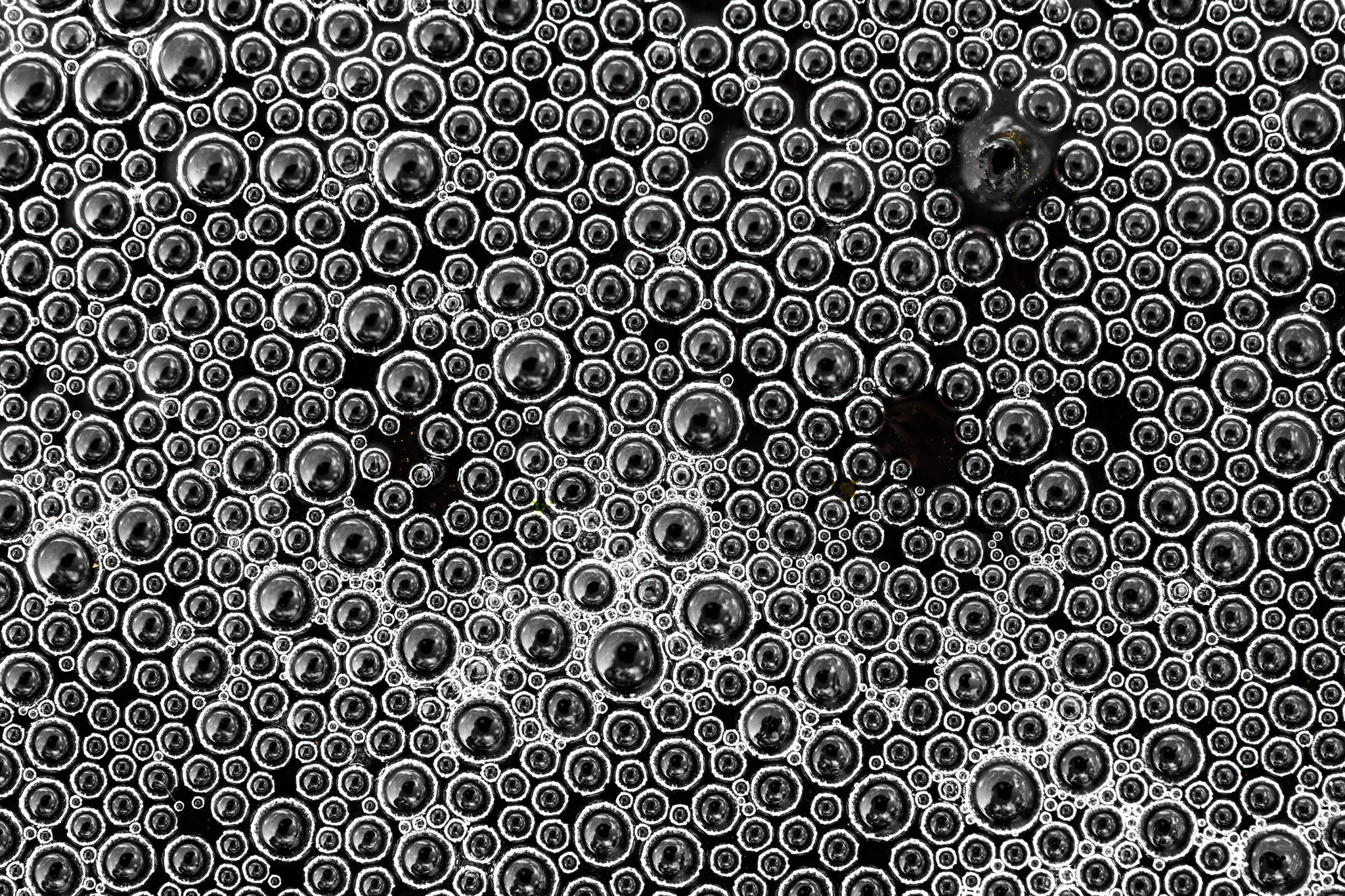
Circular Pattern
Sometimes there is no animal to recognise. The repeating circles and the gaps between them are enough to keep me looking.

White Hare in Motion
The white shape stands apart from the dark ground. The blur lets me feel its movement without filling the frame with detail.
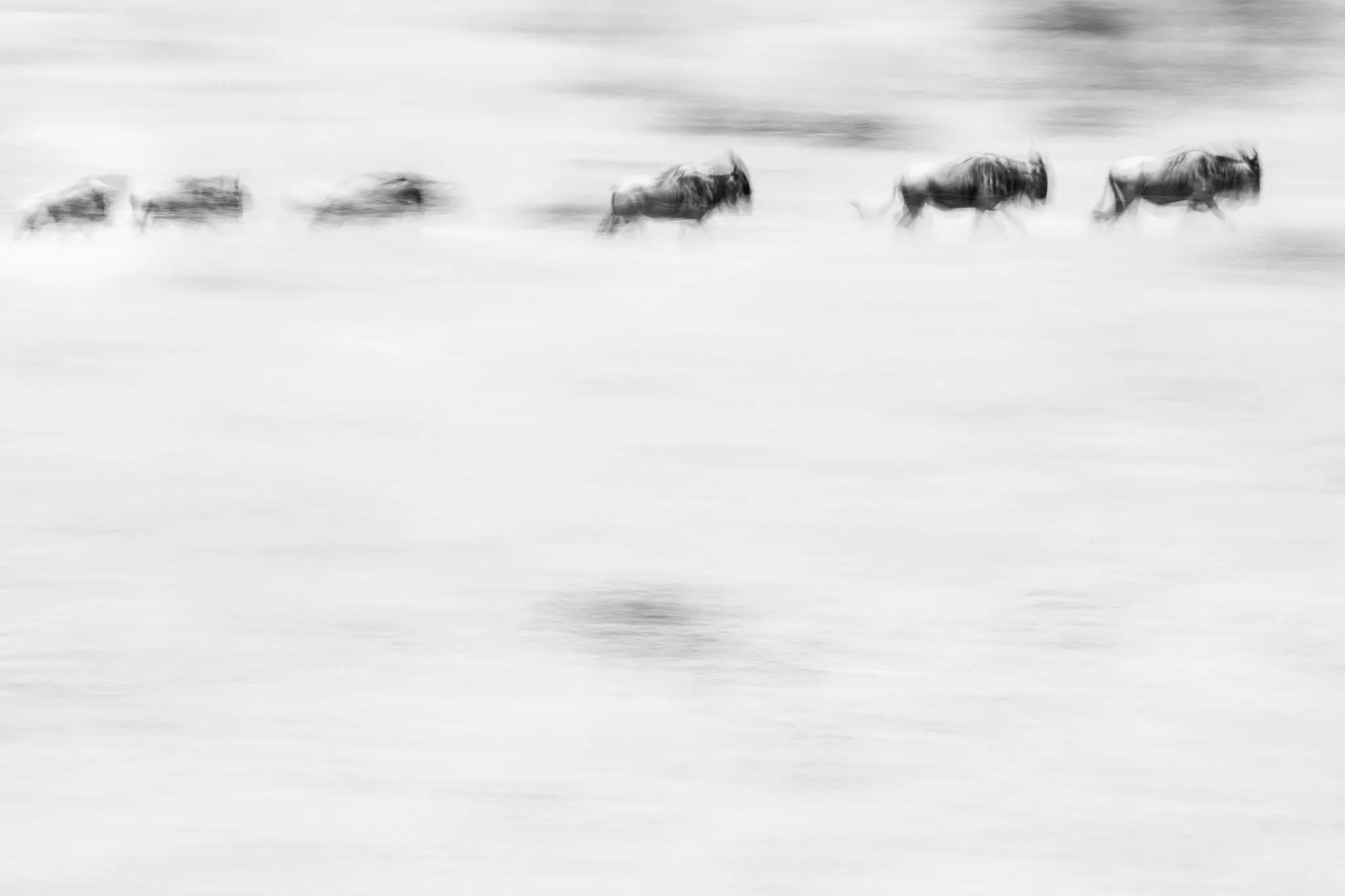
Evolution
A slow shutter turned the wildebeest into a rhythm of shapes. What first caught my eye was their movement, not their colour.
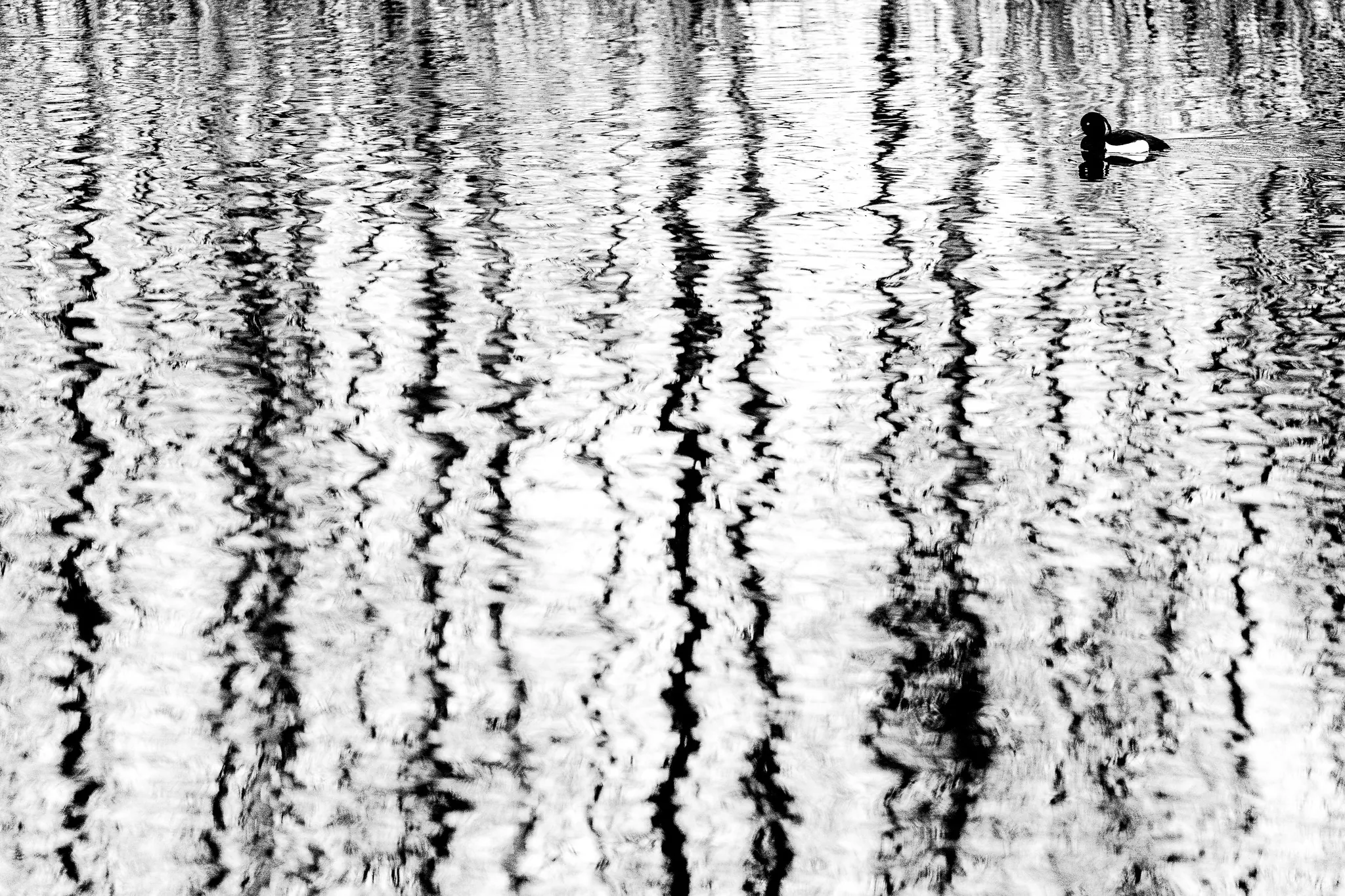
Wave with Wildlife
I like how the duck gives a sense of scale to a field of reflections that almost becomes a drawing.
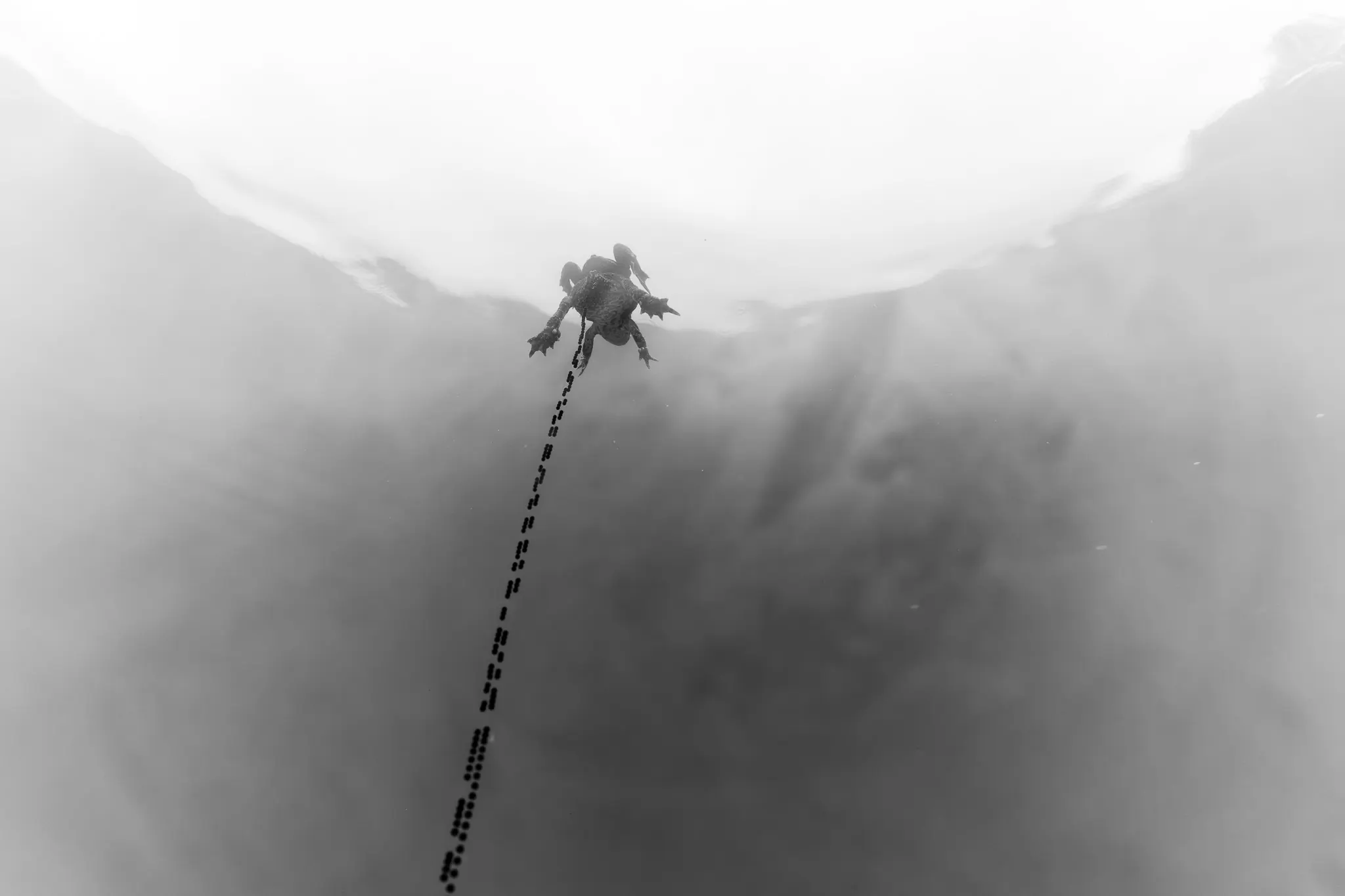
Mating Moments
Photographed from beneath the water, the toad and the long string of eggs become a few dark marks against the light.
Random Trees
The spacing between the trees turns the snowy hillside into a quiet pattern of dark lines and white space.
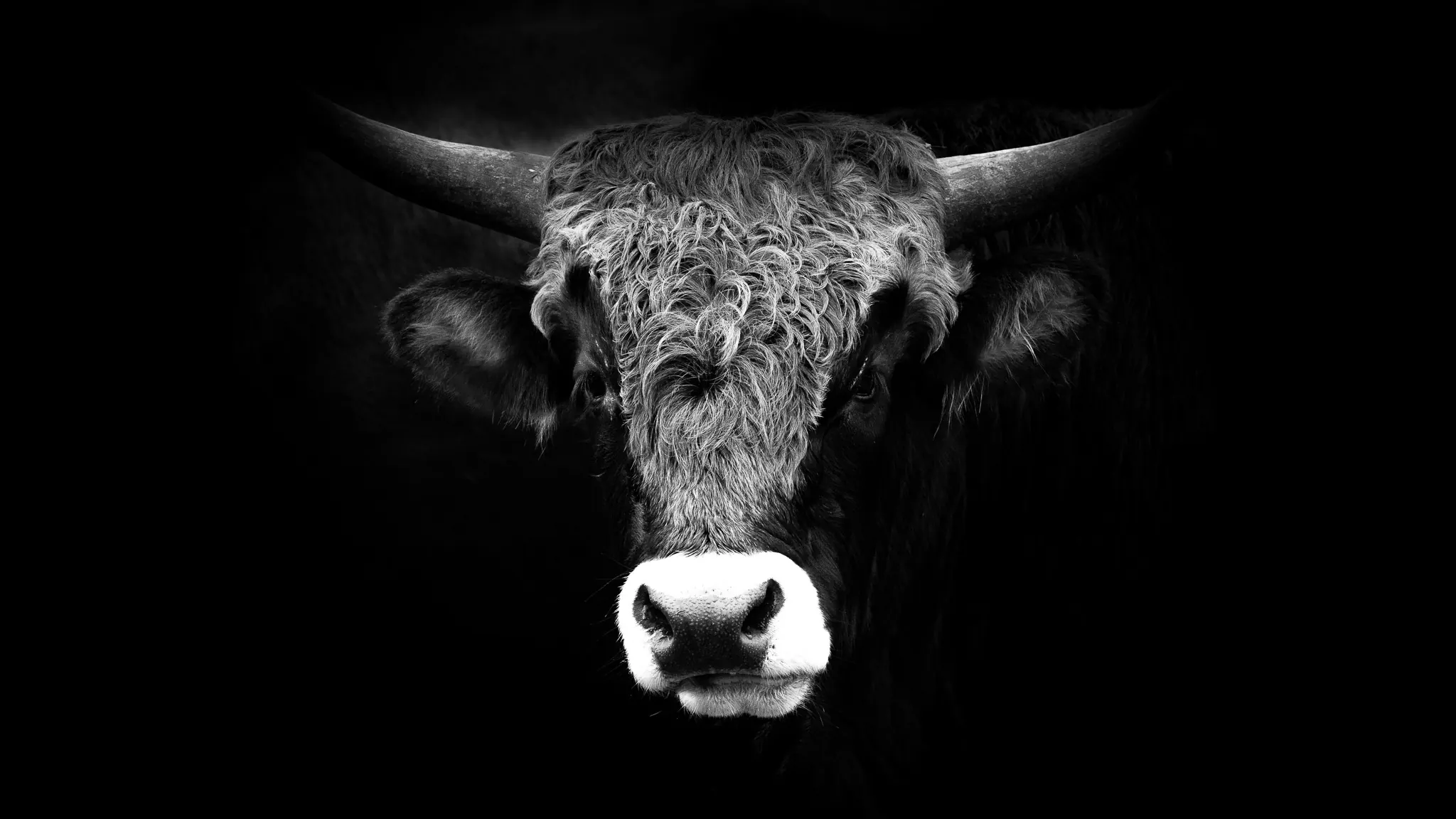
Horned Cow Portrait
The dark background leaves just the face, the horns and the light on the muzzle. I do not need much more here.
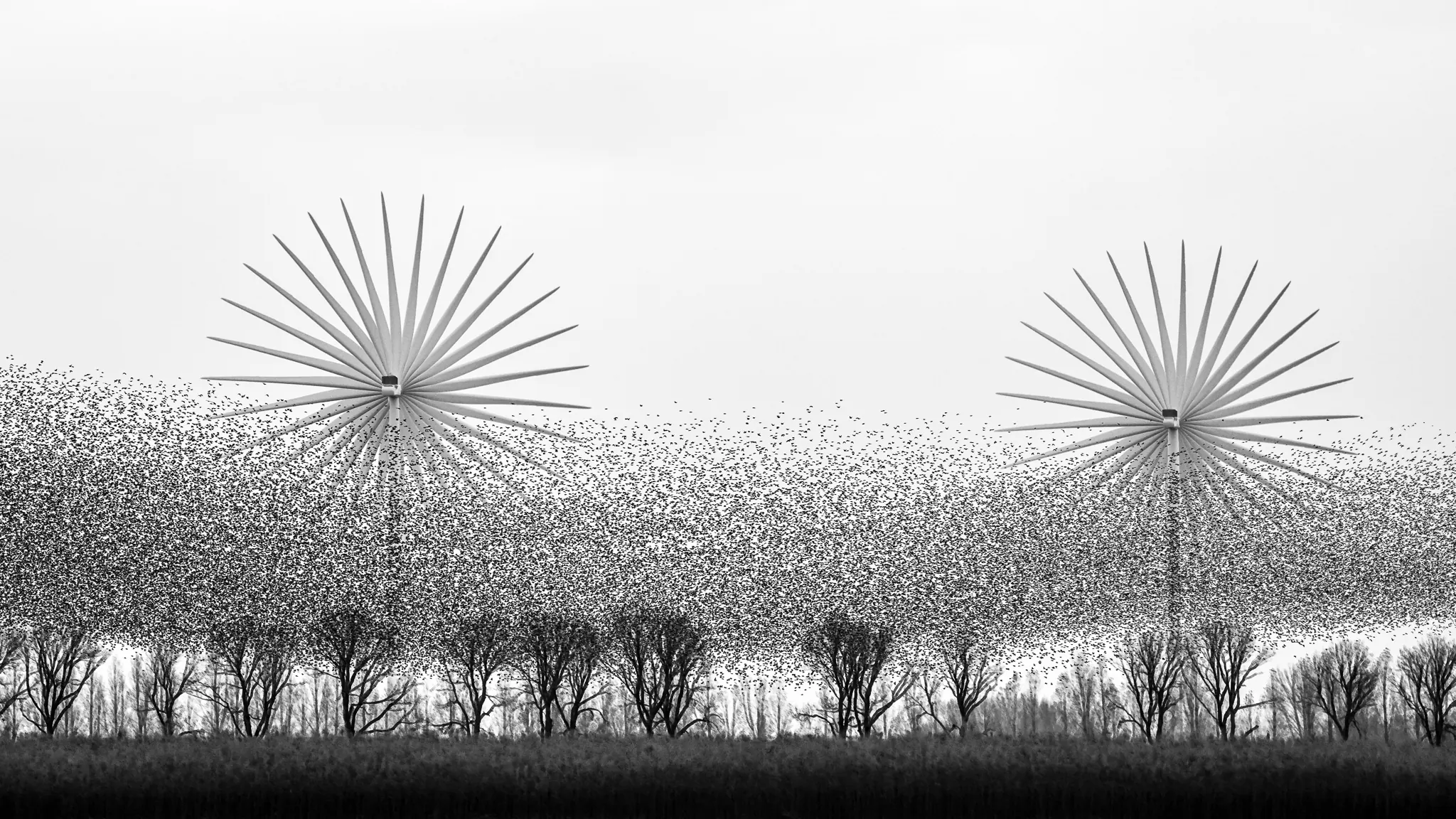
Blade Barrier
The starlings move past the turbines while the bare trees hold the bottom of the frame. The contrast gives the scene its tension. In 2026, Blade Barrier received an honorable mention at Asferico.
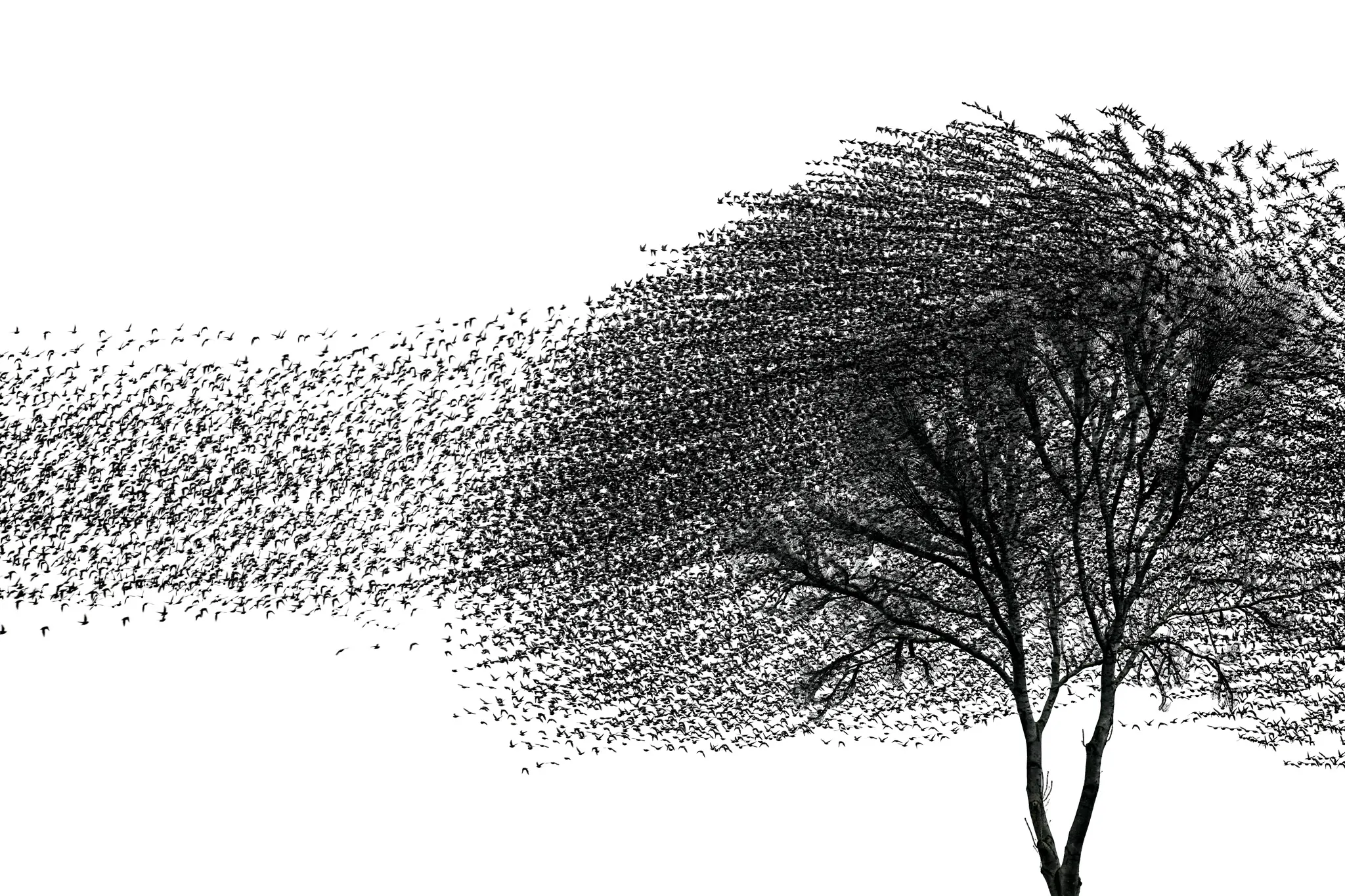
Come and Go
I made this with multiple exposures in camera. The birds and the tree come together like black ink on white paper. Come and Go belongs to my Stranger Things series; that page shows other photographs from the project.
My approach
Look first. Remove later.
I often go out with a subject or an image in mind, while staying open to what happens around me. Sometimes I return several times until the light and background come together. That is as true for black and white as it is for colour.
Converting an image to black and white is not a way to rescue a cluttered photograph. I want the shape, the moment and the space to be there in the exposure. Editing only helps me direct attention to what I saw.
Continue exploring
Colour is only
one of my choices.
In my portfolio, you can see how I also work with colour, space and small details. The essay on minimalist wildlife photography explores that way of seeing through four different images.